
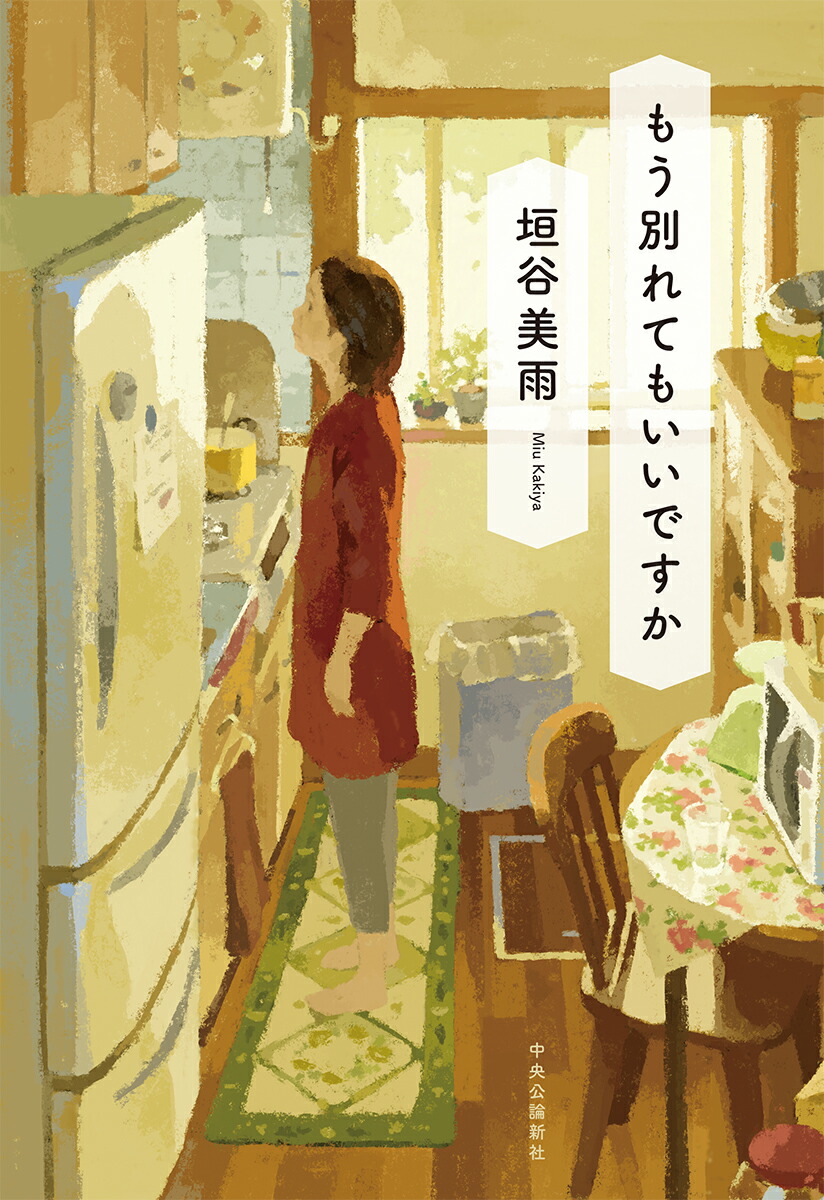
もう別れてもいいですか?
(Mou Wakaretemo Ii Desuka?)
by 垣谷美雨 (Miu Kakiya)
Author: 垣谷美雨 (Miu Kakiya)
Japanese Level: High-Intermediate (N2)
Genre: Slice-of-life, drama, middle-aged protagonist
Pages: 321
Bookwalker Japan: もう別れてもいいですか?
Japanese Summary
58歳の主婦・澄子は、横暴な夫・孝男との生活に苦しんでいた。
田舎の狭いコミュニティで、モラハラ夫に従うしかない澄子を変えたのは、離婚して自分らしく生きる元同級生との再会だった。
勇気を振り絞って離婚を決意するも、財産分与の難航、経済力の不安、娘夫婦の不和など、困難が山積。澄子は自分の人生を取り戻せるのか?
平凡な主婦による、不屈の離婚達成物語!
English Summary (translation by Japanese Talk Online)
58-year-old housewife Sumiko suffers under her aging tyrannical husband. The only thing she can do in her small countryside community is obey her psychological abusive husband, but that changes when she reunites with her old schoolmate who’s now divorced and living on her own.
Sumiko summons the courage to divorce her husband, but there’s the distribution of property, financial instability, her daughter and her husband, and a mountain of other issues to worry about. Can she really turn her life around now?
This is the story about an average housewife and her persistence in achieving a life of divorce!
Why You Should Read もう別れてもいいですか?
もう別れてもいいでですか? is a charming story all about marriage and divorce.
Sumiko is a 57-year-old housewife who hates her husband. He’s not physically abusive, he doesn’t cheat on her, or have a gambling or drinking problem, she just doesn’t love him and he doesn’t love her. He’s actually a massive asshole to her, but in a way that’s “normal” for a lot of married men.
The story follows Sumiko as she comes to grips with various aspects of divorce; the reasons for getting divorced, the stigmatism that comes with it, the struggles women in Japan face when they divorce, etc.
The experience of reading this book reminded me of 傲慢と善良 (Gouman to Zenryou) which was all about 婚活 (konkatsu)—when Japanese people specifically look for partners to get married to. I overall enjoyed 傲慢と善良 (Gouman to Zenryou)‘s discussions about what it means to marry someone, how well you should know them, and marrying for the sake of marrying. But it was also kind of a slog to read.
もう別れてもいいですか?, on the other hand, was an absolute joy. There were times where I couldn’t put it down. Not because there was anything as exciting or thrilling as a missing person (like in 傲慢と善良 Gouman to Zenryou), but because the issues the main character runs into were really engaging.
There are no chapters in this book, yet each segment is distinct as if they were chapters. Many Japanese novels tend to waffle on for 80% of the story with a “sudden twist” at the end (the “kishotenketsu” style of story telling)—which I’m honestly tired of. But every part to this story had a point. It wasn’t slog for the sake of having something in the story before a big twist.
AND, even better, the main character grows throughout! She goes from a quiet woman who’s always belittled by her husband, to someone who gains confidence and learns how to speak her mind.
I love Sumiko so much as a protagonist. She’s an average 58-year-old housewife who is incredibly smart and open minded, despite the limitations of being stuck in a small town in the middle of nowhere. You get to hear a lot of her internal monologue and I really enjoyed reading her voice.
Why Japanese Learners Should Read もう別れてもいいですか?
This novel is fantastic for N2 level vocabulary and grammar, in particular for vocabulary you’d find in everyday life.
Because the conversations of the novel are around married life and divorce, you’ll find a lot of advanced vocabulary and grammar that’s commonly used, but not commonly taught. Mostly things used by adults in everyday conversation.
On the other hand, because this book is slice-of-life and the main character is so fun to read, it makes it a relatively easy read. You don’t have to worry about weird politics or phycological drama, just plain middled-aged life drama.
Let’s Split Up
I loved this book. It was my Japanese favourite book in 2025. The story itself is nothing ground breaking or mind blowing, it was just a sloid, enjoyable read.
The author, Miu Kakiya, says in her afterword that she wanted to write a novel that empowered Japanese women. She wanted to show that you don’t need to be physically abused or for your husband to cheat on you to justify divorce, and although it’s difficult and scary your own mental health and happiness is more important than what society thinks.
I think that’s what makes this novel so good. Kakiya wasn’t writing for an award or to emotionally manipulate her audience, but for a very specific audience in mind with a very specific purpose.
Even if you’re a middle-aged Japanese housewife, I highly recommend this novel. Especially if you life life drama stories and learning more about real Japan.
You can try a sample of it here on Bookwalker Japan!
Similar Novels to もう別れてもいいですか?
A Mysterious Look at Society “Pride and Virtue” – 傲慢と善良 (Gouman to Zenryou)
The Thrills and Horrors of Overwork in Japan – わたし、定時で帰ります (Watashi Teiji de Kaerimasu)
My Manager Is a Moron – 店長がバガすぎて (Tencho ga Baka sugite)