
I started learning Korean recently—okay, that’s a lie, I actually started learning Korean about three years ago but was struggling to get beyond beginner level. I even went to Korea and the moment I had to talk to someone I froze up. Everything I had studied vanished into the ether. I just couldn’t speak the language I’d been learning.
I was drilling vocabulary on Anki and working with a teacher online to improve my speaking, but that still wasn’t enough.
This was the same issue I had when I started learning Japanese and it took me a few years before I was able to have even basic conversations with people. My study methods have improved over the years (which I document on this site) but I had forgotten what I had done to get comfortable speaking Japanese.
Despite already going through this once for Japanese, I fell for the same beginner trap when studying Korean—I wasn’t focusing on putting what I was learning into my active memory.
I have a whole post here about passive vs active memory, but basically;
- Passive memory is when you need an external source to trigger a specific memory.
- Active memory is when you can remember something through your own volition without prompting.
Yes, I was using SRS flashcards to learn vocabulary, and yes, I was studying with a teacher online, but it was taking forever. I wasn’t being as efficient as I could have been.
What Was I Doing Wrong?
My main issue was, despite studying with a teacher once a week and drilling my vocabulary every couple of days, I wasn’t focusing on memorizing what I was learning.
When studying flashcards I would get something right and then move on.
When working with the teacher we would have a basic conversation, she would correct any mistakes, and then we’d move on to something new.
I was repeating what I was learning, and studying it on a regular basis, but was moving from one thing to another too quickly for it to stick. Then I would forget a word or grammar pattern and have to re-learn it. Over and over and over again.
So what should have I been doing?
Repeat Until You Get it Right Seven Times
I play piano. I’m not a child prodigy or anything, but I’m decent. To improve my skills I started watching Learn Piano with Jazer Lee and one of his tips jumped out at me:
“I like to do little sections in sets of seven… The first few times will be a little rusty, the third and fourth times you’ll be getting better, and by the seventh time you won’t be thinking about playing it, it’s just happening.”
– How To Learn A Piano Piece Quickly | 5 Crucial Steps
When I learn a new piece I practice it a segment at a time until I can play each segment seven times in a row without any mistakes. This takes a lot of time and energy, but it’s helped improve my piano playing immensely.
Coincidentally this is the exact same technique my new Korean school uses. And it’s also what my school in Japan did back when I started my Japanese journey forever ago.
Learning New Vocabulary
All the language schools I’ve attended over the years had weekly vocabulary quizzes. Every day we’d learn a handful of new words and were quizzed on them randomly the following week.
To learn this new vocab I would drill them on paper and verbally repeatedly, so I could write and say them without having to think about it.
I would have the English and Japanese in a list, cover the Japanese and say or write (or do both!) the word in Japanese. And if I got it wrong, I would re-do it a few times, move onto the next word, and then come back to the word I got wrong.
I would repeat this throughout the week until I was confident that I could use the words without thinking about it.
Learning New Grammar
When learning new grammar patterns (especially verb conjugations), my teachers would drill the grammar in class until we got it right.
They would have a set of about 25 basic verbs (either in picture form on large flashcards or in a textbook) and we would go over the grammar pattern for each and every one multiple times until no mistakes were made.
These lessons usually looked like this:
- Go over the grammar, conjugating each verb in order slowly.
If I get one wrong, we go back two verbs and try again. - Go over the grammar, conjugating each verb in order a little faster.
If I get one wrong, we go back two verbs and try again. - Go over the conjugations with a time limit.
- Go over the conjugations randomly.
Homework would also be to practice these at home and be able to say them within a time limit.
Once I could say the verbs without issue, we would move onto turning them into short sentences. We’d practice these sentences over and over again until I could say them without issues.
For example, when I practiced the past tense for basic verbs I could turn those into simple sentences like, “I went to the hospital” or “I played with my friend.”
We would mix in the vocab we were learning or had already learned for extra practice, drilling nouns and conjugating adjectives as necessary.
Doing These Exercises Yourself
Whether you’re a solo learner or studying with a teacher, you can use these techniques yourself to improve your Japanese speaking.
How? Simple.
1. Get a list of verbs (or adjectives) that you’re learning. You ideally want just a picture or the dictionary form of the verb.
Here’s a chart of some (but not all) N5 verbs.
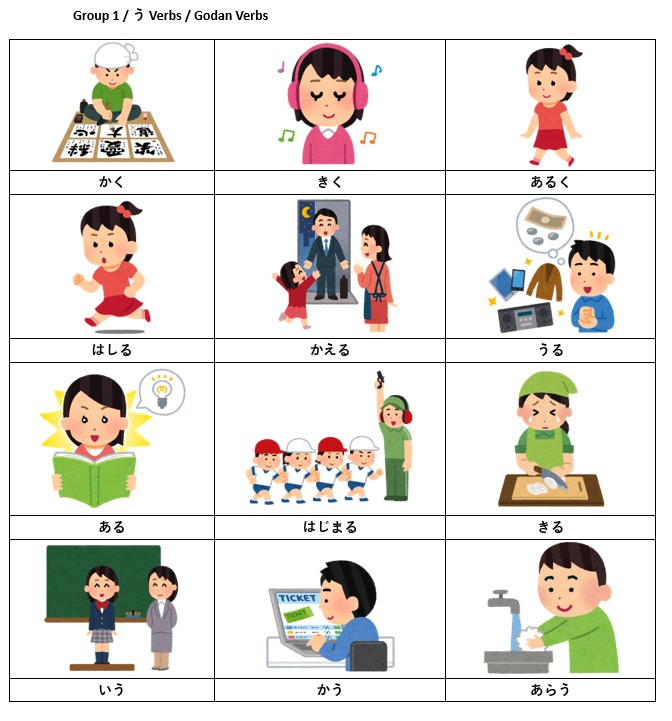
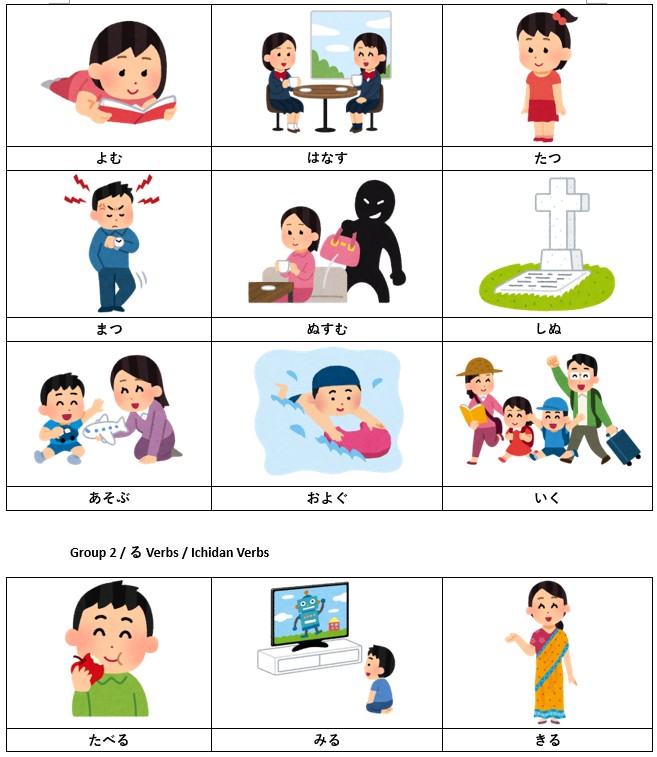
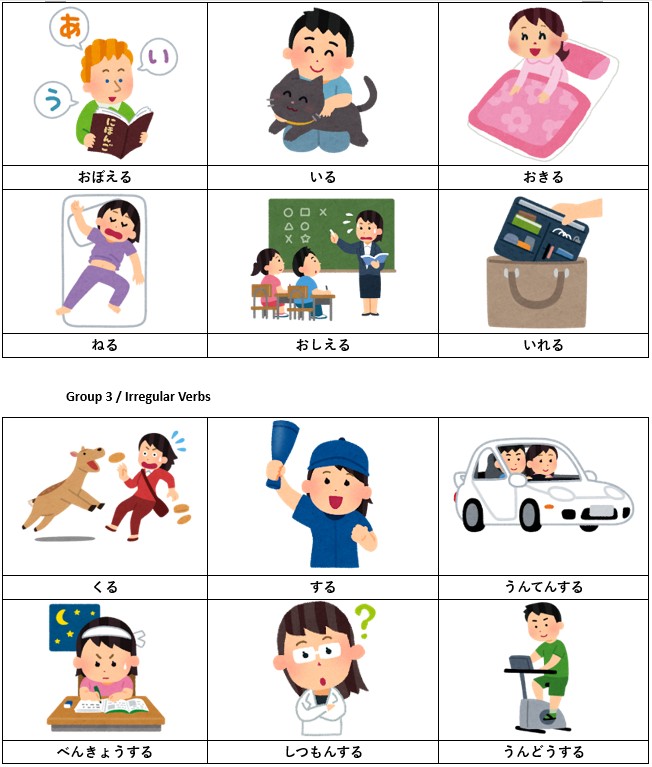
2. Point at the first word, (in this case かく) and say the grammar you want to practice out loud in a clear voice.
For example, “かきました”
3. Move on to the next word and do the same, and again.
4. If you get a word wrong, stumble over the word, or don’t know the meaning of the word, go back two words and start again. If you’re studying by yourself and you’re not sure if you got it right, double check the answer, then go back, even if you got it right.
So if you’re on あるく and you get it wrong go back to かく.
5. Once you’ve gone through the whole list once, do it again, then again backwards through the list, then again in a different order. (It helps to change the order so your brain doesn’t start thinking “this word comes after this word”.)
6. Give yourself a timer, around 40 seconds for the follow 36 words, and try to go through the whole list saying the grammar you’re practicing within the time limit.
At the end of the exercise your speaking and using that grammar pattern will have improved.
The Trick to Improve Your Speaking
The trick to speaking Japanese as a beginner is surprisingly simple. Practice core grammar patterns with a variety of verbs and adjectives until you can say them without struggling. Then build on that by making sentences and being able to say those without difficulty.
If you can do this exercise with a teacher, study friend, or speaking partner, then all the better as they can prompt you with the English. But if you’re by yourself then you can prompt yourself with your own flashcards or the ones shared here.
Focus on a different grammar pattern every week and you’ll be a lot more comfortable with speaking in no time.
Other articles you might find useful:
Japanese Study Techniques to Achieve Your Goals
Why It’s Important to Speak Japanese Early On
How to Get Good at Japanese Fast
Japanese Graded Readers for JLPT N5 and N4 Learners