
This week marks twenty years since I first started learning Japanese. Twenty years!!!
I started this journey the week before my 17th birthday by learning from a private teacher. I never expected it to go anywhere, just another hobby that I’d drop after a few months, but I fell in love with the language, the culture, and the people. Now I live in Japan, work for a Japanese company, and speak it every single day.
Here’s what Japanese has taught me over the last two decades.
My Learning Journey
You see people talking about how they studied every day for hours on end, sentence mining native media, and achieving fluency in just a couple of years. That’s not me. I started with a book that taught Japanese through romaji and it took me about a year to two years to learn the equivalent of N5 level Japanese. (N5 didn’t exist back then, though.)
I go through my learning journey in more detail in How I Learn Japanese, but needless to say, I wasn’t very diligent, and dyslexia and ADHD on top of that made learning a challenge.
There were also periods where I didn’t study for months on end, but I did stick with it and eventually became fluent.
Over the years I’ve studied with private teachers (both in-person and online), at university, at multiple language schools in Japan, and taught myself with textbooks and apps.
Here’s all the most important things I’ve learned that I think every learner of another language should be conscious of.

Keep Going, Even If Other People Are “Better”
Jealously towards people I see as being better than me is an issue I face for multiple things. Especially in Japanese, and especially if they haven’t been studying for as long.
Back when I was doing a year abroad at Kansai Gaidai University in Osaka, there was another student in a more advanced language class than me. She was about N2 level while I was around low-N3 and I was incredibly jealous of how good she was.
I kept thinking, “why can’t I be that good?”
But after we left Kansai Gaidai she didn’t continue her Japanese studies while I did.
I met up with her again a few years later and found out I had finally surpassed her. Which, honestly, I was really sad about. The rivalry had been all one-sided and there was no sense of victory or triumph.
Learning a language is a personal endeavor. There’s nothing wrong with having a break or stopping, as much as there’s nothing wrong with going slow. You can compare yourself to others but it doesn’t do anyone any good.
Let other people’s success motivate you, but never discourage you. Just as I learned from my different teachers and textbooks I could have learned from her as well.
You Have to Go Outside Your Comfort Zone
I always loved the idea of reading a novel in Japanese but hated not being good enough to do it. Every time I picked up a book I wanted to read, I struggled to understand words or phrases and would get bored and/or frustrated, and ultimately give up.
This was severely damping my progression, and I knew it was, which just added to my frustration.
I ended up picking a book that was a lot easier than the level I thought I was at, and tried reading it. Even with it being so ‘easy’ it was still difficult in parts and there were sections I didn’t fully understand because I wasn’t used to reading so much at once. But I pushed through.
The second and third books were easier, and now, after five years, I’ve read over 100 novels and non-fiction books in Japanese and many more manga.
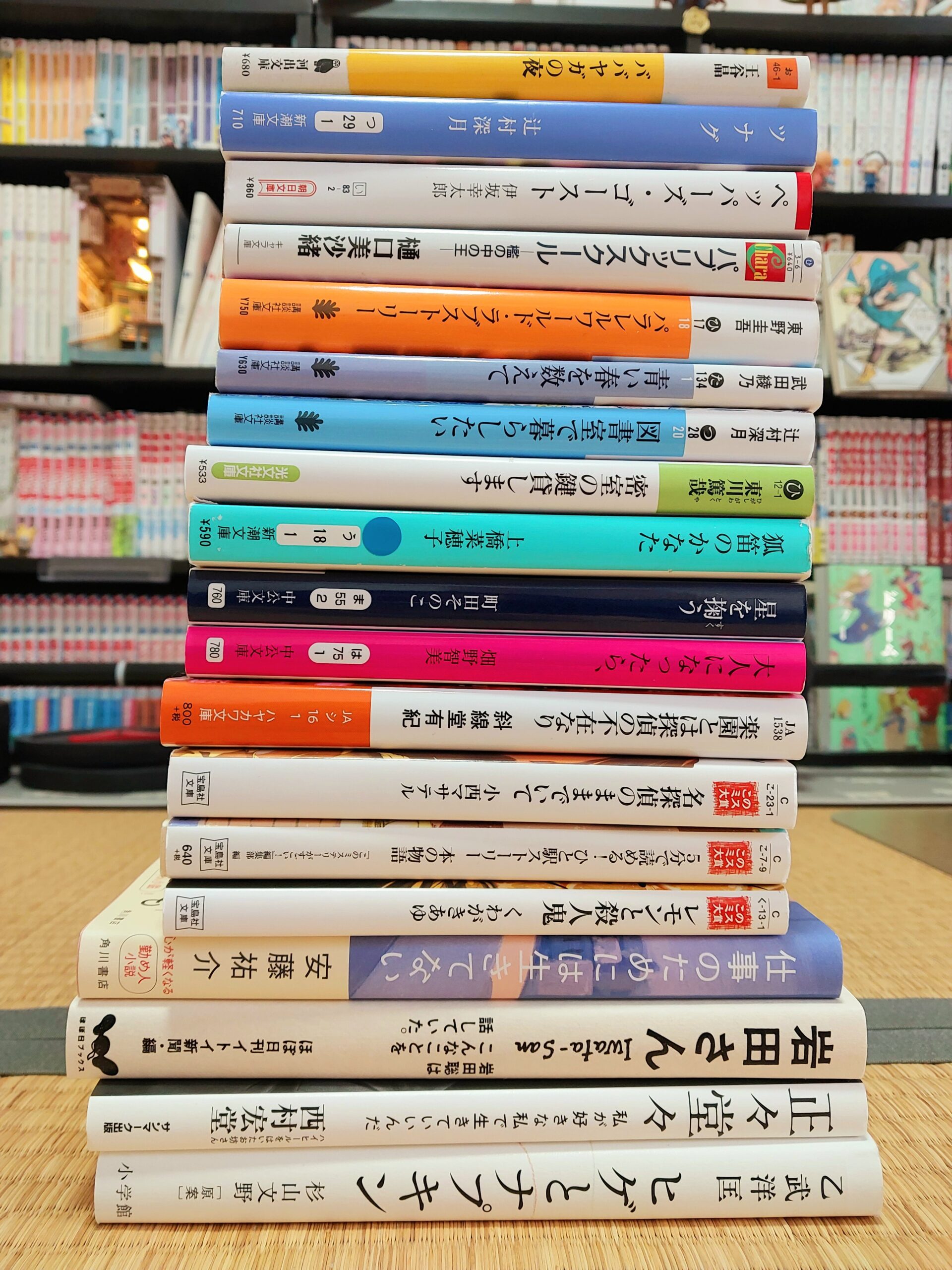
Similarly, I used to be incredibly self-conscious about speaking Japanese in front of people. My dad came to visit while I was studying abroad and I was very awkward about talking in front of him. When he asked why I said I was afraid of making a mistake. “How would I know if you made a mistake?! I don’t speak Japanese!” he replied.
I have made a lot of mistakes when talking to Japanese people, and will no doubt continue to do so. No one ever directly corrects my Japanese (unless I’ve asked a teacher to do just that), but I can still tell when I’ve said something that’s just not quite right.
But often a Japanese person paraphrases what I’ve said back, essentially telling me how to word things more naturally without drawing attention to the fact I made a mistake. These moments have been incredibly educational and I would have missed them had I not put myself out there. Yes, it’s been embarrassing but I’ve also improved a lot thanks to it.
You have to go outside your comfort zone, make mistakes, and actively learn from them if you want to improve.
You Need to Put the Work In
Homework was always my least favorite things to do at school. This extended to Japanese too. My teacher would give me very easy assignments and I would always wait until the last minute, and almost never went back and reviewed my lessons. (Did I mention I did not study diligently?)
But then, when I went to a Japanese language school and later university in Japan, I had to start doing homework, lest I get left behind by my peers. It turned out the more work I put into my homework, and the more effort I put into memorizing and learning the materials, the better I got. Who knew?
It’s common sense, and I knew this in theory, but it didn’t really hit home until I actually did it.
My favorite exercise was writing speeches, having them corrected by native speakers, and then memorizing them to present to the class. I probably wouldn’t have done this without the external motivation of “you have to do this to get a good grade,” but it taught me that putting the work in helps improve your skill quickly. Now to go back twenty years to tell myself that…

Quality Over Quantity
I learned this lesson the hard way, kinda like the other lessons I’ve already mentioned.
My first attempt at the N1 exam was when I was studying for my MA in translation. I used SRS flashcards to study for several hours a day, cramming vocabulary and kanji and grammar as fast as possible and I ended up crashing and burning—hard.
Since then, I’ve stopped trying to cram as much into my brain as quickly as possible and instead take my time to understand what I’m learning.
When I finally passed the N1 (on my 10th attempt) it was thanks to me going slowly through my study materials and working closely with a teacher to improve my reading comprehension techniques. I didn’t finish the entire N1 book I was using (I want to go back and finish it), but even taking my time with part of it helped a lot.
“I fear not the youtuber who has studied 10,000 kanji once, but the student who has studied one kanji 10,000 times.” Or something like that… (Learn more than one kanji, please.)
Prioritize Want Over Need
Finally, my general attitude towards learning Japanese has shifted. Towards the end of my university tenure, I felt like I needed to study loads. I needed to pass the N2 and then N1 if I wanted to get anywhere. I needed to push myself.
That made learning Japanese feel more like a chore and made me not want to do it.
After recovering from burnout during my MA, I changed my attitude. Need became want. I want to be able to read a novel. I want to study for the N1.
Changing my attitude from “need to” to “want to” helped me prioritize my goals and how I wanted to achieve them. It also made Japanese a lot more enjoyable.
My goals now are to read at least 12 books in Japanese every year, which has been going really well. I want to read novels I’ve been meaning to read for years. I want to finish a book quickly so I can get to the next one. It’s been a lot of fun.
I don’t think I would have read as much if I kept saying “I need to read 12 books” and beaten myself up if I hadn’t hit my monthly target.

There we have it. What 20 years of learning Japanese has taught me.
I’ve stumbled a lot along the way, making many, many mistakes, but also had a lot of successes. And for half of that journey I’ve been able to share my experiences and opinions on learning Japanese through this site.
Here’s to many more decades of continuous growth and learning.
Other Articles You Might Like
The Benefits of Studying in Japan
Japanese Study Techniques to Achieve Your Goals
How To Study Japanese with ADHD