
I previously wrote a very, very long article all about study resources and tips for beginners looking to learn Japanese. But there’s not really anything like this for intermediate learners.
Intermediate Japanese study is sightly differently from beginners. When you’re a beginner you’re focusing on getting basics down, but can’t do much with the language. Intermediate Japanese is when you can start to be able to have conversations and understand media made for Japanese people. But you still need structured study to understand new words, kanji, and grammar that’s used in every-day Japanese.
So here’s a mixture of study resources and study tips for intermediate learners to boost their Japanese skills.
The Japanese You Need to Know (for Intermediate Japanese)
My definition of beginner Japanese is the equivalent of the JLPT N5 and N4 Japanese. (JLPT = Japanese Language Proficiency Test.) Intermediate is the next step with JLPT N3 being low-intermediate, and JLPT N2 materials being high-intermediate.
Here’s roughly how much Japanese you need to know for the equivalent of N3 and N2:
JLPT N3
Vocabulary: 2250 new words (total of 3750)
Kanji: 366 new kanji (total of 650)
Grammar: 120 new grammar patterns (total of 240)
JLPT N2
Vocabulary: 2250 new words (total of 6,000)
Kanji: 450 new kanji (total of 1100)
Grammar: 195 new grammar patterns (total of 435)
As an intermediate Japanese learner, these are the goals you should aim for (even if you don’t plan on taking the JLPT.) But these are just the base language you need to study. At an intermediate level of Japanese you should also be practicing reading, writing, speaking, and listening skills so you can use the language more fluently.
How Long Will This Take?
Just like with beginner Japanese, how long depends entirely on you. Not just how much you study on a daily basis but how and what you study.
At this point many people feel like they’re not improving at all, no matter how much they’re studying. They plateau.
At the intermediate level it’s not enough to drill vocabulary and kanji. To get beyond the intermediate plateau you should combine reading, writing, speaking, and listening practice with vocabulary, kanji, and grammar study. The more you train all those key skills, the faster you’ll improve.
Even saying that it can take 1-2 years to study all the N3 level Japanese, and another 2-4 years for N2 level. It’s important to take it steady at a pace that works for you.
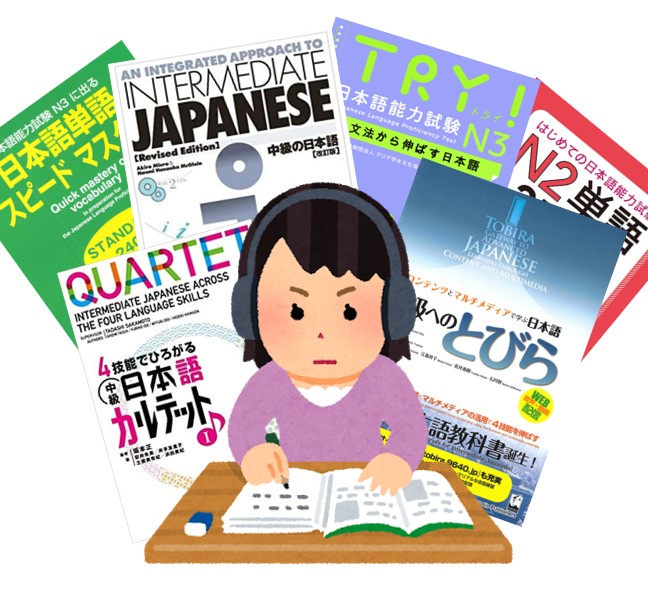
All-Rounded Textbooks for Intermediate Japanese
If you studied Japanese with a textbook like Genki or Japanese for Busy People but aren’t sure where to go next, then any one of these textbooks is a good option.
Textbooks are great for getting a balanced study of a language. A good textbook should have a variety of exercises and teach the language through listening, speaking, reading, and writing. Textbooks are designed to be worked through with a teacher, but if you’re a solo learner, there are YouTube videos, Reddit, and other resources people have put together to help you use textbooks on your own.
These textbooks are also great primers for the N3 and N2 exams, but if you plan to take the JLPT you should study with additional JLPT focused books too.
The following three textbooks are the mostly widely used for intermediate Japanese. They all teach roughly the same information, but present them in different ways with different exercises. ToKini Andy has a great video which breaks down the difference between these books in more detail. He has an opinion on the best one, but you should still explore them to see if they’d work for your learning style.
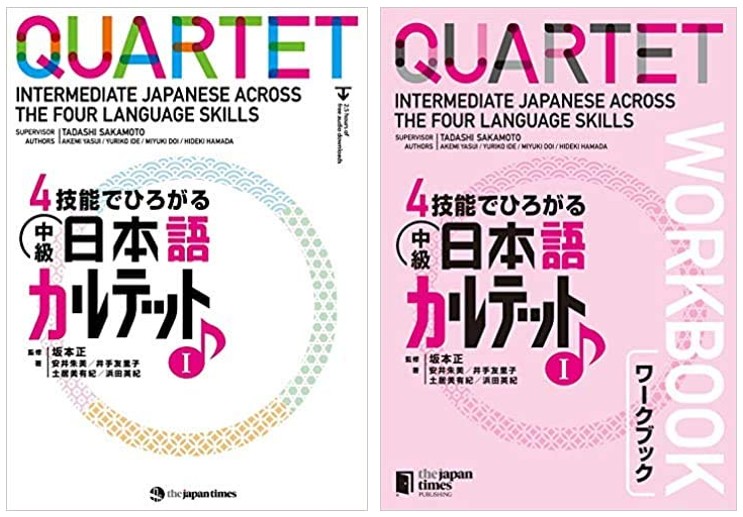
Quartet
Teaches you: reading, writing, speaking, listening
Teaching style: textbook, workbook, exercises
Great for learners who like: structure, balanced study, working with a teacher, solo learning
Quartet is designed to teach you Japanese through the four key skills of reading, writing, listening, and speaking. There are two textbooks, each with their own workbook for you to practice with.
Quartet offers additional tips for how to improve your reading comprehension skills, grammar, and other comprehension skills. It really does a good job of teaching you how to improve your skills through teaching you how to study not just throwing exercises at you. (This is similar to the JLPT Shin-Kanzen Master approach which teaches you tips on how to pass the JLPT, not just drill exercises.)
These books are designed to be used with a teacher, but are probably the best option for self-study. There is a compendium YouTube series by ToKini Andy that goes through each lesson if you need additional explanations. But saying that, you could probably get more out of this books (especially the speaking exercises) if you worked with a teacher.
You can find out more about these books on their website.
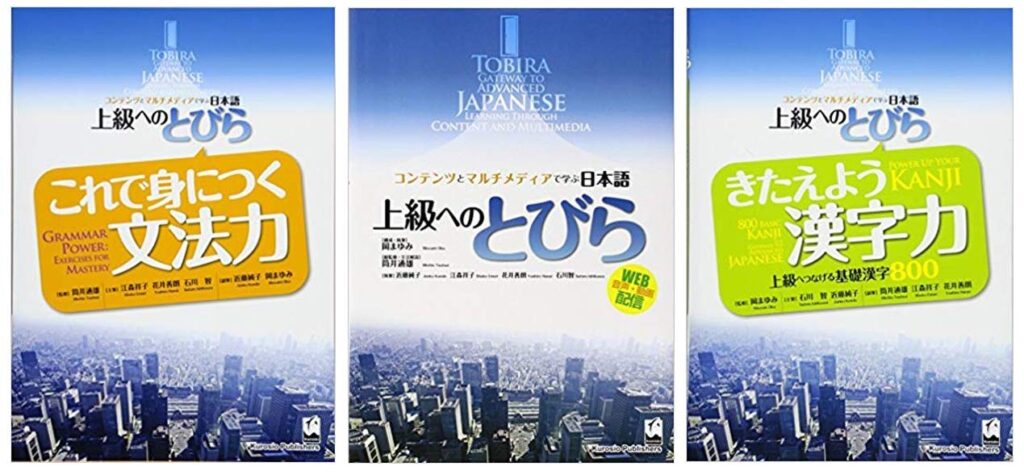
Tobria
Teaches you: grammar, vocabulary, kanji
Teaching style: textbook, exercises, listening, reading, writing, speaking
Great for learners who like: structure, working with a teacher
Tobira offers a base textbook which focuses on reading comprehension, with additional books that focus on kanji and grammar.
Each chapter in the core book covers a different topic, teaching you vocabulary, kanji, and grammar related to that topic. This is great for intermediate level as it introduces you to topics you’re likely to find in everyday life in Japan.
Just like other textbooks, this book is designed to be studied with a teacher, making it challenging for solo learners. But there are materials other learners have made to make easier to use these books even if you don’t have a teacher. Such as this Tobira Study Resources site.
You can learn more about these books on their website.
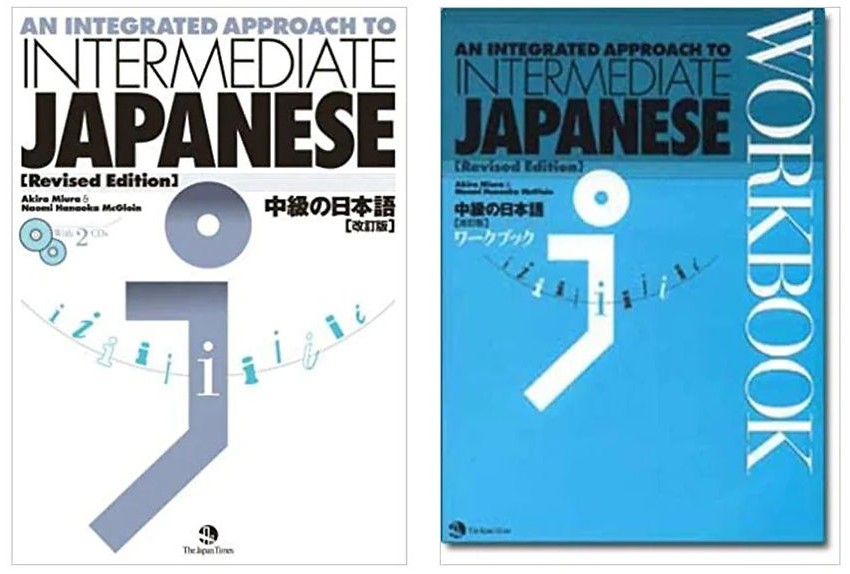
An Integrated Approach to Intermediate Japanese
Teaches you: grammar, vocabulary, kanji
Teaching style: textbook, workbook, reading, writing, listening, speaking
Great for learners who like: structure, working with a teacher
Note: There is a revised edition from 2024 with free downloadable audio.
Just like the other textbooks, An Integrated Approach to Intermediate Japanese is designed to be used with a teacher so doesn’t contain many English translation or explanations, and no answers for either the textbook or workbook.
The main textbook focuses on teaching you through real-world situations for speaking and reading, with practice exercises for each chapter. The workbooks give you additional space to practice focusing more on kanji and grammar.
The World in Japanese has a really nice review for this book along with additional tips on how to use the book for your studies.
Grammar for Intermediate Japanese
Grammar begins to get a little tricky at the intermediate level. It starts to become a lot more nuanced with more similar sounding grammar patterns, many of which are only used in certain situations.
This is why you need a strong understanding of basic Japanese grammar. Intermediate Japanese becomes a lot more difficult to wrap your head around if you don’t understand the basics. (It’s why I argue grammar and vocabulary are a lot more important than kanji when it comes to actually understanding the intricacies of the language.)
It’s at this point that I highly recommend you combine at least one study book with additional explanations through teachers or YouTube channels.
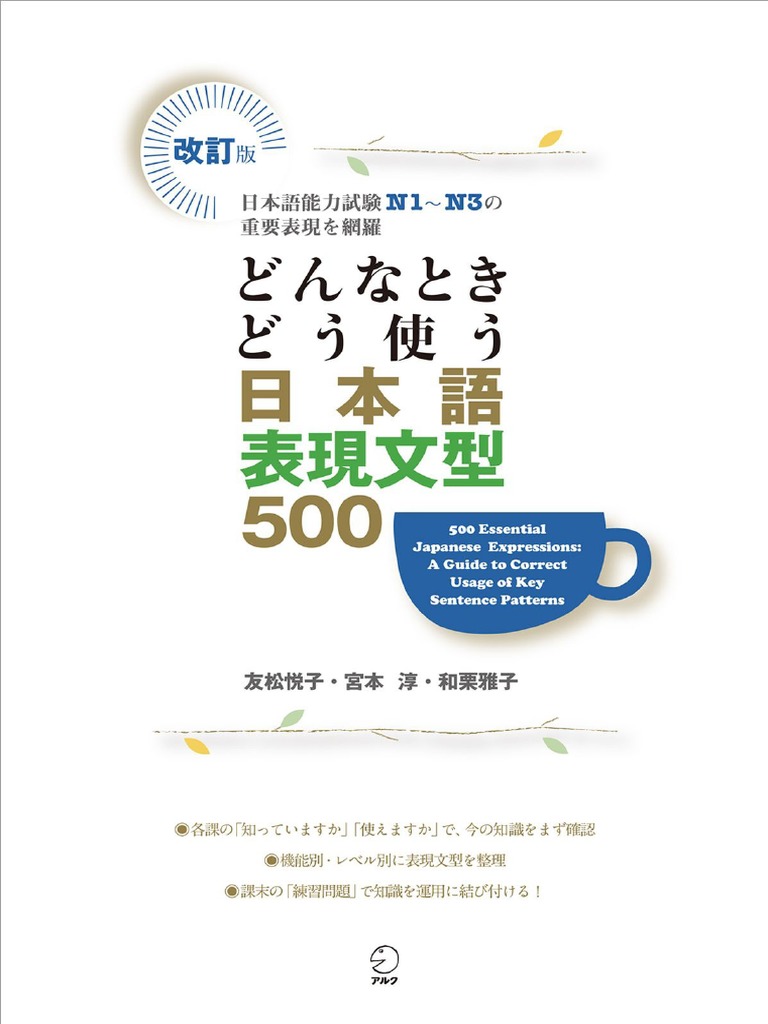
どんなときどう使い日本語表現文型500
Teaches you: similar grammar for N3-N1 levels
Teaching style: example sentences, exercises
Great for learners who like: to understand the nuances between similar grammar
I love this book for learning intermediate and advanced grammar. Unlike other grammar books 表現文型500 teaches you N3, N2, and N1 grammar together, showing you the subtle nuanced differences between similar grammar. (The level of the grammar is depicted in a cute little bug with the number 3, 2, 1 in it.)
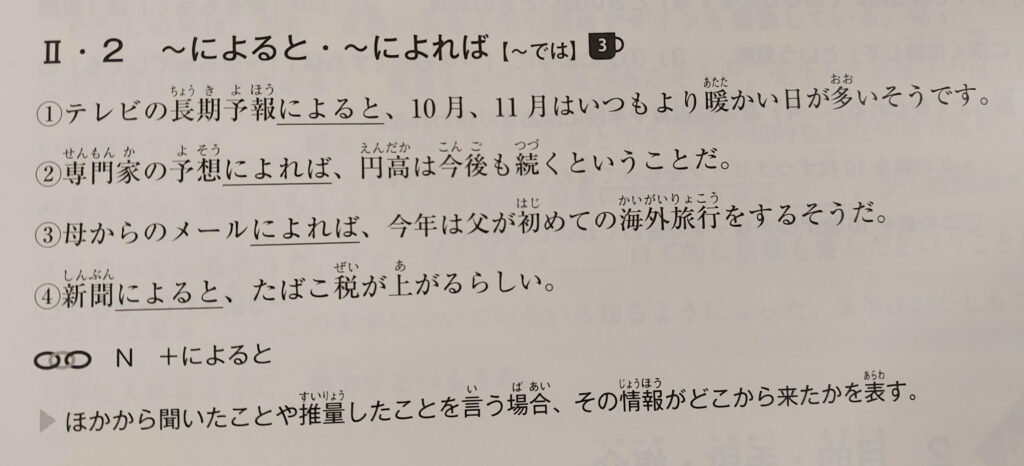
This book does not have detailed explanations. The grammar meaning is “explained” with a very short equivalent grammar followed by a new example sentences, how the grammar is used with nouns and verbs, and then an additional explanation.
I’m an auditorial learner so I combined this book with the YouTube channel 出口日語 (see below) so I could get more detailed explanations of individual grammar. But you can also use a grammar dictionary or online explanations (Just be careful of grammar explanations generated by AI as they aren’t reliable.)
Each chapter comes with a few exercises to practice with, but you’re better off getting a grammar drill book if you want extensive practice.
Try! 日本語能力試験
Teaches you: grammar, JLPT
Teaching style: explanations, example sentences, exercises
Great for learners who like: structure, English explanations, audio exercises
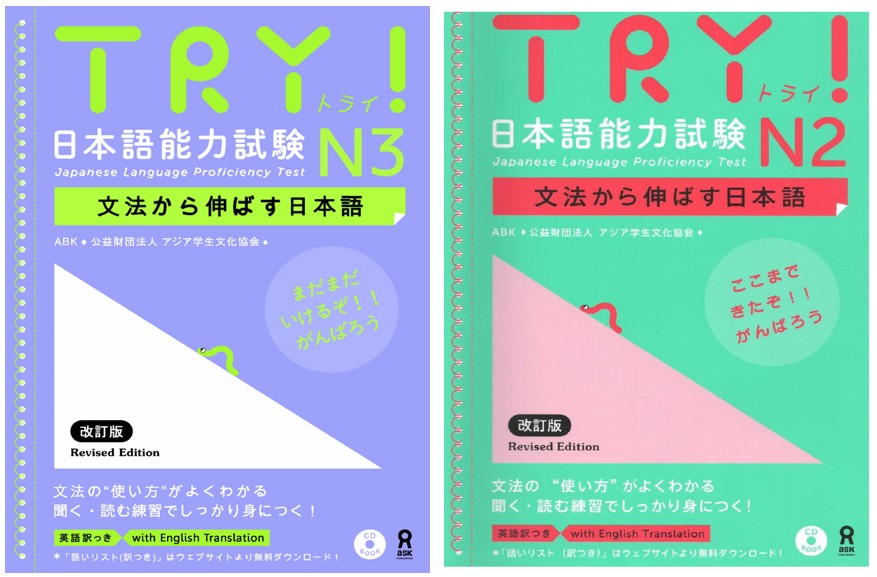
The Try! grammar series divides grammar by JLPT level, but you don’t need to take the test to learn grammar from these books!
Each chapter starts with a short reading section (that you can also listen to with their CD) that includes the grammar that’s covered in the chapter, then explains each grammar pattern. The explanations are in Japanese and English translations, how it’s used with nouns and verbs, followed by example sentences. Each grammar is also accompanied by a star level that shows you how common the pattern is.
Each chapter then ends with a few exercises and JLPT style questions with multiple choice, reading, and listening exercises.
These are great if you’re looking to learn grammar specifically for the JLPT, but can also be great for studying grammar in general. Again, if you find the explanations lacking, YouTube or a grammar dictionary or online reference can help provide additional explanations.
新完全マスター
Teaches you: grammar, JLPT
Teaching style: explanations, example sentences, exercises
Great for learners who like: structure, Japanese explanations
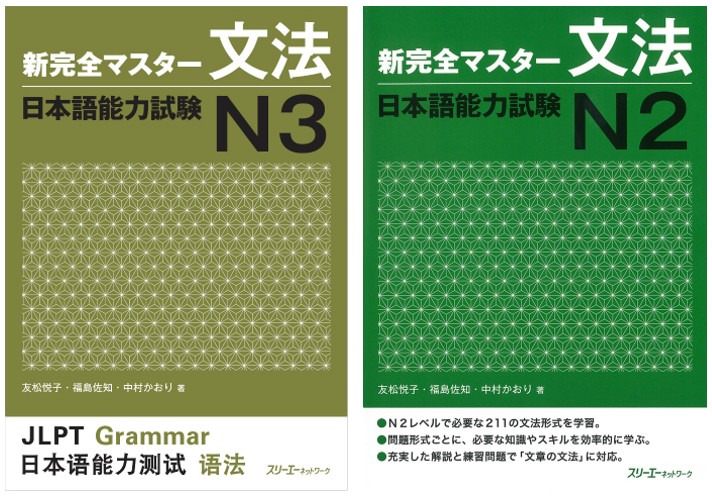
The Shinkanzen Master series is one of the most popular series of books for learning Japanese for the JLPT. The grammar series is similar to the Try! books but they present the information and practice exercises slightly differently. For one, the explanations are given only in Japanese.
Each chapter comes with explanations and example sentences followed by some practice questions. The end of the book also has tips for taking the exam and even more example questions.
Grammar References
出口日語 [YouTube]
Teaches you: grammar
Teaching style: videos, lecture
Great for learners who like: auditory lessons, a teacher, Japanese explanations
This YouTube channel provides grammar lessons by a Japanese language teacher for all levels of the JLPT. There are 120 grammar videos for N3 and 120 videos for N2.
Deguchi Sensei teaches you each grammar pattern as if he were teaching a class at a language school. He uses a white board to explain the uses and nuances for each grammar pattern.
His explanations are all in Japanese, but very easy to understand. Making them educational about grammar and good listening practice!
Warning: These videos have auto-dubbing turned on (gross), so I highly recommend using a web extension that blocks YouTube’s auto translator.
日本語の森 [YouTube]
Teaches you: grammar
Teaching style: video, lecture
Great for learners who like: auditory lessons, a Japanese teacher, less serious explanations
Nihongo no Mori is a popular YouTube channel for grammar explanations. They have a wide variety of videos and try to make all the explanations fun and interesting. (This also means they can get a little cringe of you feel awkward with bad acting.)
Their videos aren’t as well organized as Deguchi Nikki but you can find a playlist of their grammar videos from N3 to N1 here.
教師と学習者のための日本語文型辞典
Teaches you: grammar
Teaching style: dictionary
Great for learners who like: explanations in Japanese
This book isn’t suitable for learning on its own, but I do think it’s the best grammar dictionary you can get to accompany other study methods such as one of the JLPT grammar books or a drill book.
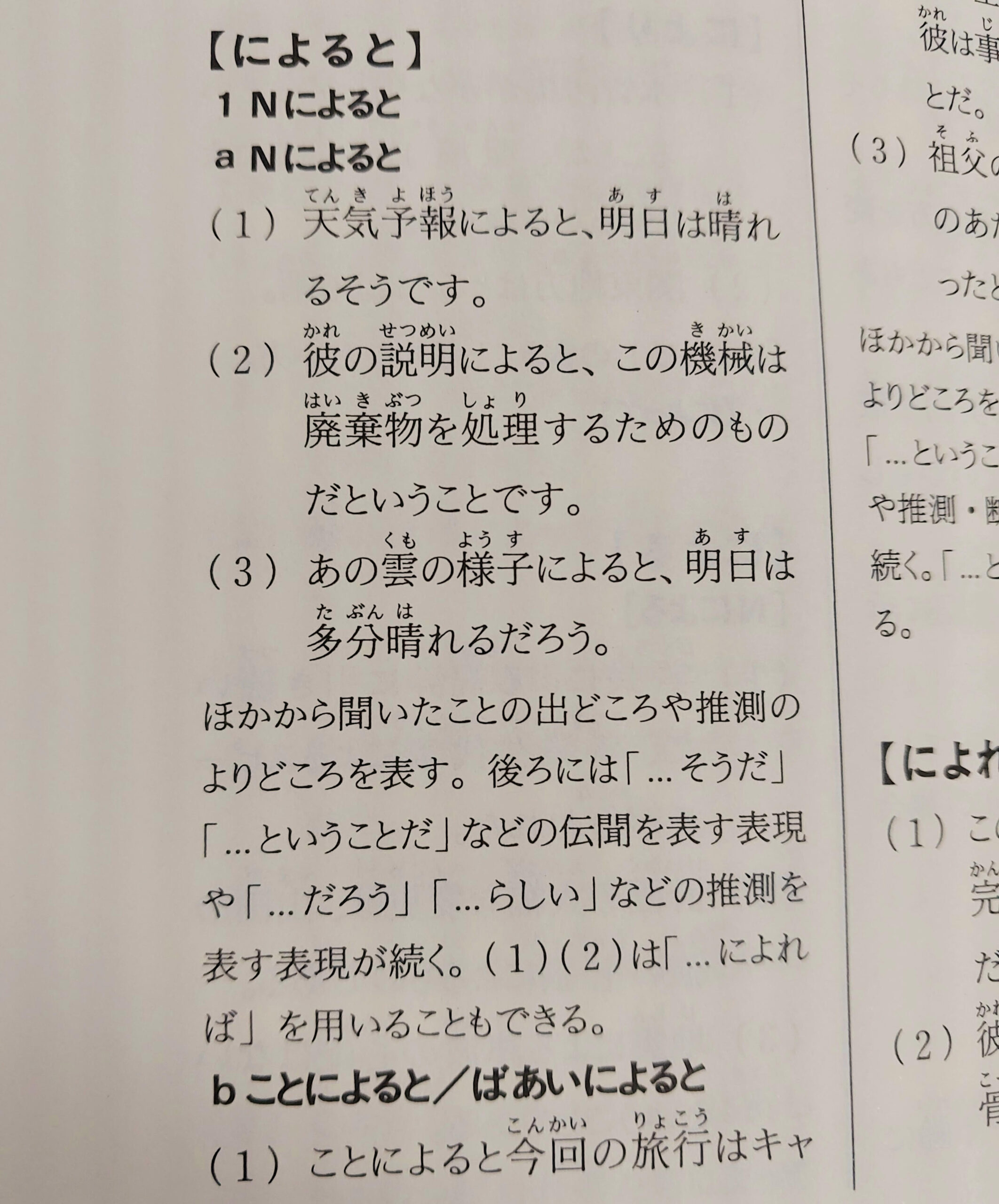
This grammar dictionary is made for Japanese teachers and learners, explaining Japanese grammar in Japanese along with example sentences and additional information. As the explanations are written for Japanese teachers, I find they have more detailed explanations than grammar books written for learners.
The book doesn’t indicate what level of the JLPT grammar is or its difficulty level.
Vocabulary for Intermediate Japanese
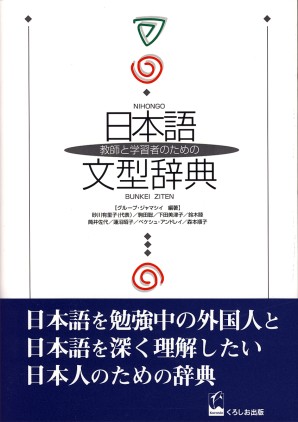
Nihongo Tango Speed Master (Classic)
Teaches you: vocabulary, sentences
Teaching style: textbook
Great for learners who like: examples, reading
These are still my favorite books for boosting vocabulary. The Basic book covers vocabulary for N5 and N4 Japanese, while N3 and N2 are separated into two books, Standard and Intermediate.
Each book contains about 2,400 to 2,500 words with example sentences and audio for listening/shadowing practice. They don’t have practice questions, so you need make sure you study each segment.
I would go through these books and add the words I didn’t know or weren’t confident about into a flashcard program, then drill them. The act of going through the book and manually adding words that were specific to me was a lot of work but helped me memorize them.
See my review on these books here: Review of Nihongo Tango Speed Master for JLPT Vocabulary
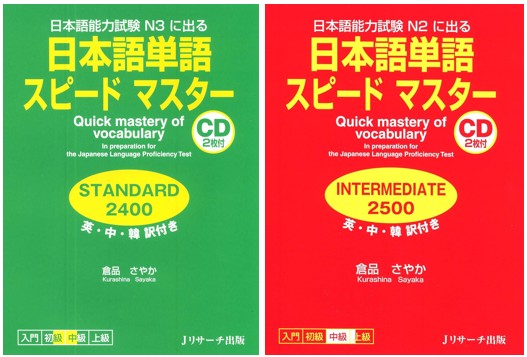
Essential Vocabulary for the JLPT N3 / JLPT N2
Teaches you: vocabulary, sentences, grammar
Teaching style: textbook
Great for learners who like: examples, reading, exercises, illustrations
The Essential Vocabulary books are similar to the Nihongo Tango Speed Master books with vocabulary split by subject and example sentences, but the information is presented in different ways.
The N3 book contains 2,000 words while the N2 book has 2,500.
Similarly to the Nihongo Tango Speed Master books, these books don’t have exercises, so you need to be diligent about going through and studying the words.
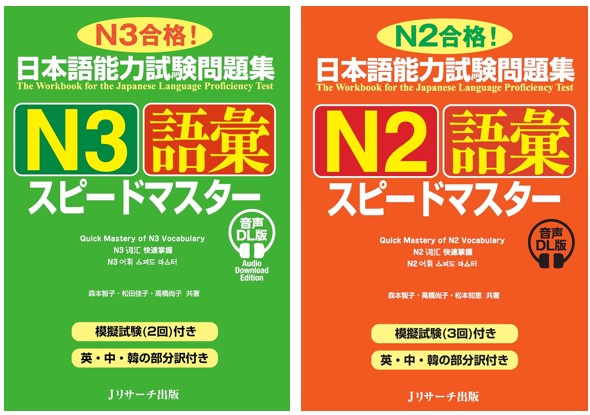
JLPT Goi/Kanji Speed Master (Workbooks)
Teaches you: vocabulary, sentences
Teaching style: textbook
Great for learners who like: examples, practice questions
These books are by the same publisher as the Nihongo Tango Speed Master, but are focused more on practice exercises for the JLPT.
There isn’t as many vocabulary in these books, but these are great compendiums for other vocabulary books for additional practice. Especially if you plan to the JLPT.
There is ALSO a version for kanji if you want more practice workbooks for kanji.
Kanji for Intermediate Japanese
There are a few resources for the beginner Japanese kanji that I also recommend for intermediate level, although if you already use these then they probably don’t need much of an explanation.
Kanji Study (Android Only)
Teaches you: kanji meaning, reading, writing, vocabulary
Teaching style: flashcards, quizzes (vocabulary, writing, and sentence comprehension)
Great for learners who like: flexibility, writing, reading, flashcards, quizzes
Kanji Study offers free beginner levels (kana and JLPT N5 kanji) and then charges a one-time fee of about $10 to unlock the higher levels. SRS flashcards are available for an additional $30.
Kanji Study is my go-to app for studying kanji because of how versatile it is. It’s hard to explain all the features of this app here, but if you’re interested you can check out these three articles:
- Review of Japanese Kanji Study Android App
- The New Japanese Kanji Study App SRS Expansion—Guided Study
- Tips and Tricks for the Japanese Kanji Study App
This app is great for intermediate and advanced learners because you can tailor the groups and flashcards based on what you’re learning kanji for and how you prefer to learn. You can study through kanji meaning, reading, vocabulary, writing, etc.
One of my favorite features of Kanji Study is how you can add kanji, vocabulary, and example sentences to Anki for additional SRS flashcard practice.

新完全マスター (Shin-Kanzen Master)
Teaches you: kanji meaning, reading, vocabulary
Teaching style: textbook, drills, JLP style questions
Great for learners who like: quizzes, structure
The Shin-Kanzen Master books are the most popular for studying for the JLPT, but that doesn’t mean you need to take the exam to study with these books. The kanji book for N3 and N2 Japanese are particularly good resources for studying kanji.
Each chapter presents the kanji, their reading, and example vocabulary using those readings. It then has example questions and exercises for practicing the kanji. (I suggest you don’t write in the book so you can do the exercises multiple times.)
These books are great but you need to study and practice the kanji outside of the exercises in the textbook, such as with flashcards or another study app such as KanjiStudy.
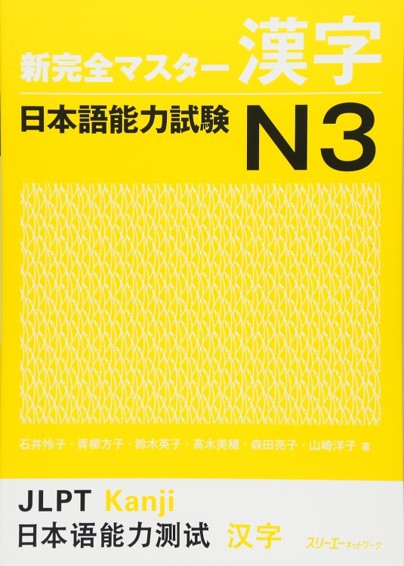
Note: Nihongo Sou-matome is a similar series of books but I do NOT recommend them for N2 or N1 Japanese. They’re lacking and don’t contain all the kanji or vocabulary you need to know.
WaniKani
Teaches you: kanji meaning, reading, vocabulary
Teaching style: SRS flashcards, mnemonics, quizzes
Great for learners who like: mnemonics, quizzes, flashcards, structure
WaniKani is a great if you’ve already started learning kanji with it, but NOT if you’re an intermediate first getting into WaniKani. Why? Because everyone has to start with basic Japanese. So people who already know beginner kanji have to re-study them before they get to any new kanji.
This might be what you’re looking for if you haven’t studied Japanese in a while, but if you don’t want to re-study the basics, it’s probably best to find a different resource of kanji.
Reading Practice for Intermediate Japanese
Reading is essential for improving your Japanese at an intermediate level. I highly recommend at this level working on reading comprehension skills and reading for fun.
Here are some tips and exercises on How to Improve Japanese Reading Comprehension. And here are some suggestions for textbooks and other resources you can use to practice your reading.
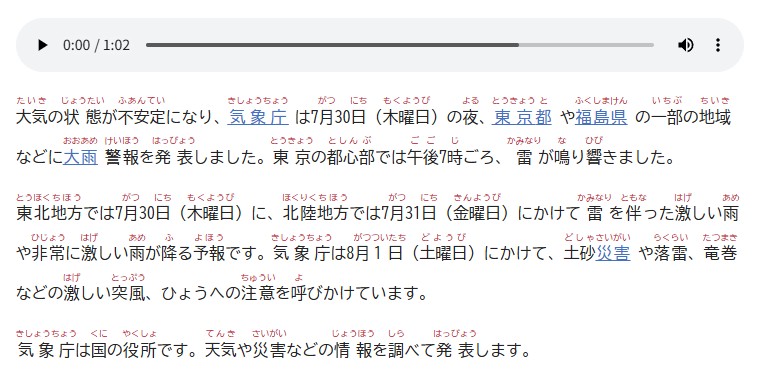
Asahi Easy Japanese News
Asashi is a Japanese newspaper that also provides “easy” news for Japanese children. They use a lot of advanced vocabulary but present it in simple sentences in です・ます form, with furigana over all kanji. The articles are also short with audio, making them great for reading and listening comprehension.
One great feature about this site is you can turn the furigana on and off! This allows you to read the article, try to understand the kanji reading and meaning of the article, then turn on the furigana to check if you got it right or not. You can also toggle spaces after words on and off if you’re not comfortable with reading long strings of kanji.
Novels and Light Novels
Once you’ve started studying N3 vocabulary, kanji, and grammar, you should be able to start reading easy novels. You probably won’t understand your first novel in its entirety, but the more you read, the more you’ll understand and the better you’ll get.
Saying that, it helps to first pick a slice-of-life or romance novel because it’s more likely to come across vocabulary you’ve studied. Sci-fi and fantasy are some of the most difficult books to read because they are more likely to use irregular kanji and grammar.
Here are some recommendations:
- All Japanese novel reviews
- 5 Japanese Light Novels for JLPT N3 Level Learners
- 5 MORE Japanese Light Novels for JLPT N3 Level Learners
If you don’t like the look of any of these, then you can find loads of other books on Natively, a free site where people share Japanese books they’ve read and grade them by difficulty. You can also find book clubs where you read a novel along with other Japanese learner and discuss them:
Listening Practice for Intermediate Japanese
Monolingual Podcasts for Japanese Learners
There’s a large number of podcasts made by Japanese people for Japanese learners to practice their listening skills with. Even if they’re not currently active, you can go back and listen to previous episodes for a lot of practices.
Some of these are one person talking about a variety of subjects, while others are interviews and discussions between people. It’s a good way to be exposed to spoken Japanese on a variety of subjects, which can help expand your vocabulary and grammar.
See a list of podcasts for all levels here.

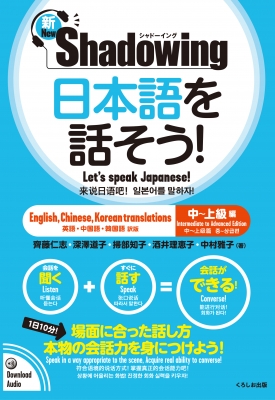
Shadowing 日本語を話そう 中~上級
Teaches you: listening, speaking, conversations
Teaching style: audio, shadowing
Great for learners who like: audio, self-teaching, daily exercises
This book is designed to help you improve your speaking through shadowing, but listening and speaking go hand-in-hand and training your speaking helps train your ear.
This book is broken down into different scenarios with example dialogue for low-intermediate and high-intermediate levels.
You’re supposed to listen to the audio (which can be downloaded) and speak along with it multiple times until you can speak fluently. Each dialogue gets longer and longer, slowly getting you used to more advanced and natural ways of speaking.
Each conversation comes with a transcription and translation (into English, Chinese, and Korean) so you can understand the meaning if you don’t know just from listening.
YouTube, Anime, Drama
Watching native media is great practice for training your ear. A wide range of media on a wide range of topics will help expose you to more diverse Japanese.
You can find YouTube videos on any subject. I particularly enjoy watching ones from BookTubers about novels they’ve read or bought. Many YouTube channels have subtitles in Japanese, too. Or you can turn Japanese subtitles on on Netflix and other streaming services.
Watching with Japanese subtitles is great to start, but no subtitles at all is the best training for improving listening comprehension. Your ear is forced to focus and listen to what’s being said in order to understand what’s going on.
Ultimate Guide for Intermediate Japanese
There’s a lot to learn for intermediate Japanese. It can take many years to proficiently memorize everything but combining study with Japanese media will help boost your skills faster than just studying or just media. I recommend 20% of your time spent studying and 80% on reading and listening. This exposes you to more natural Japanese and helps to reinforce what you’re learning.
Whatever you use to study, what matters most is finding the resources and study methods that work for you. Myself and others might say “this is the best book ever!” but there’s no point in forcing yourself to use something if it doesn’t click with you. Check out previews for books and trials for apps, and try to hunt down media that you like. Whatever keeps you motivated and keeps you learning is the best resource for intermediate Japanese.
Other Articles You Might Find Useful
Japanese Study Techniques to Achieve Your Goals
Passive and Active Memory – Turn Passive Learning into Active Use!
How to Improve Japanese Reading Comprehension